
Marvel Almost Had Its Own Gaming MCU—and Now I'm Glad It Didn't
An abandoned Marvel Gaming Universe (MGU) would have constrained Marvel Rivals and other games, but its failure let standalone titles flourish.
Picture this: it's 2025, I'm knee-deep in Marvel Rivals, frantically trying to land a headshot with Black Widow while Doctor Strange opens a portal behind the payload, and a thought hits me—what if every Marvel game ever made had been forced into one giant, tangled shared universe? I shudder. Not because I hate crossovers (I live for them), but because I just can't imagine the bureaucratic nightmare that would have been. As it turns out, someone did try to make that happen, and it fizzled out harder than my platinum rank climb.
So here's the juicy bit. Way back in the early 2010s, around the time we were all still arguing over whether Iron Man 2 was a disappointment, a secret pitch was floated inside Disney to create a full-blown Marvel Gaming Universe (MGU). Not just a nod-and-wink cameo here and there, but an interconnected web of titles all existing in the same continuity, much like the MCU we know and love today. Alexander Seropian, co-founder of Bungie and then head of Disney's video game publishing arm, pushed for it. Alex Irvine, a longtime Marvel games writer who later worked on Marvel Rivals, was part of the early dreaming. On a March 2025 episode of The Fourth Curtain podcast, Irvine dropped the bomb: \u201cWhen I first started working on Marvel games, there was this idea that they were going to create a Marvel gaming universe... it never really happened.\u201d Seropian chimed in that it was his "initiative" but the project never got funding. It died in the boardroom, a casualty of corporate caution. And honestly? Thank the Watcher it did.
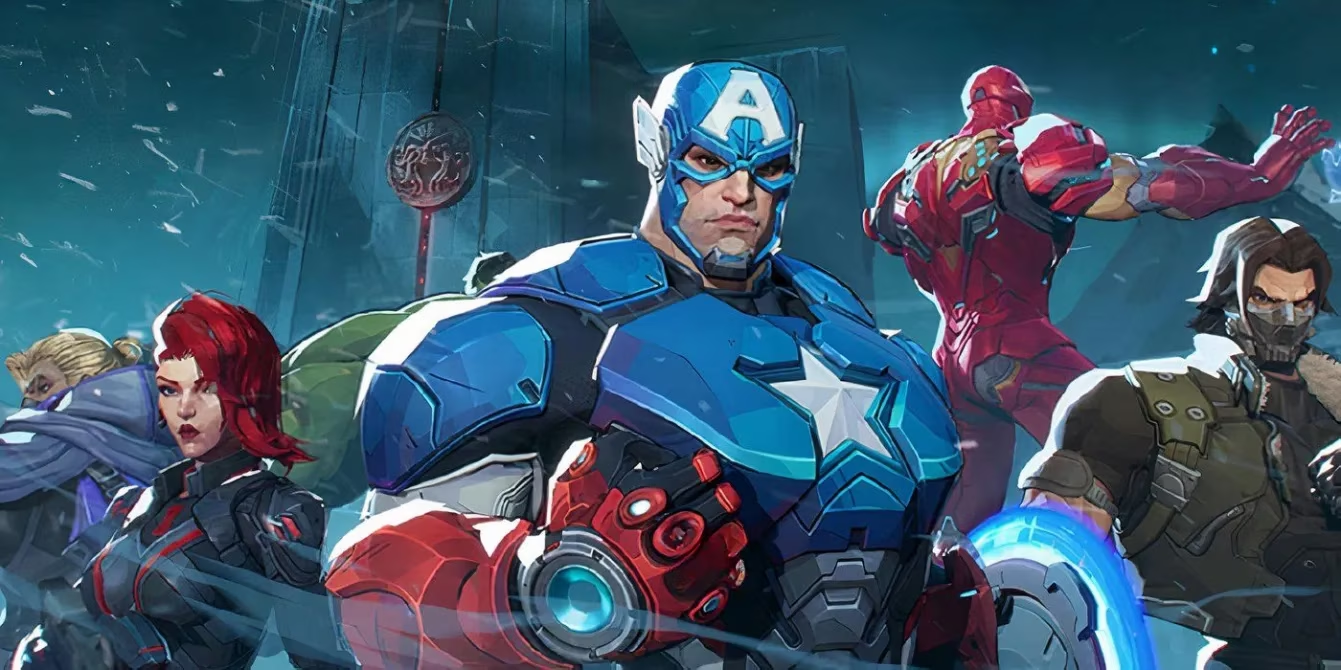
Let me explain my relief. Back then, the idea of an MGU sounded revolutionary. The MCU hadn't even fully proven itself (remember, The Avengers was still a year or two away). Imagine a world where Marvel's Spider-Man by Insomniac had to tie directly into whatever Eidos-Montréal was doing with Guardians of the Galaxy, while also leaving room for a Skydance Captain America game. It would have been a narrative straitjacket, forcing every studio to obey a central timeline. Instead, what we got is a glorious chaos of standalone masterpieces. Insomniac gave us a heartfelt Peter Parker story with a jaw-dropping Miles Morales expansion, Eidos delivered a band of misfits I actually cared about, and Firaxis handed players the keys to the Midnight Suns—each unburdened by the need to set up the next big event. That's freedom. That's art.
But wait, you say, what about Insomniac confirming that Marvel\u2019s Wolverine and its Spider-Man games share a universe? Yes, it\u2019s happening, and it\u2019s the kind of cherry-on-top fan service that makes my heart sing. A lone cameo can be a delightful treat, not a contractual obligation. The MGU would have likely overcomplicated something as simple as Logan popping up in New York. Instead, we get the best of both worlds: isolated, developer-driven narratives and the occasional wink.
Now, the MCU of video games doesn't exist in the way Seropian envisioned. Marvel Games today is a licensing powerhouse, stamping quality checks while partnering with everyone from Sony to Microsoft to NetEase. That sprawl makes a single timeline impossible. And yet, something funny happened on the way to 2026: we ended up with a de facto Marvel gaming universe anyway, in the form of Marvel Rivals.
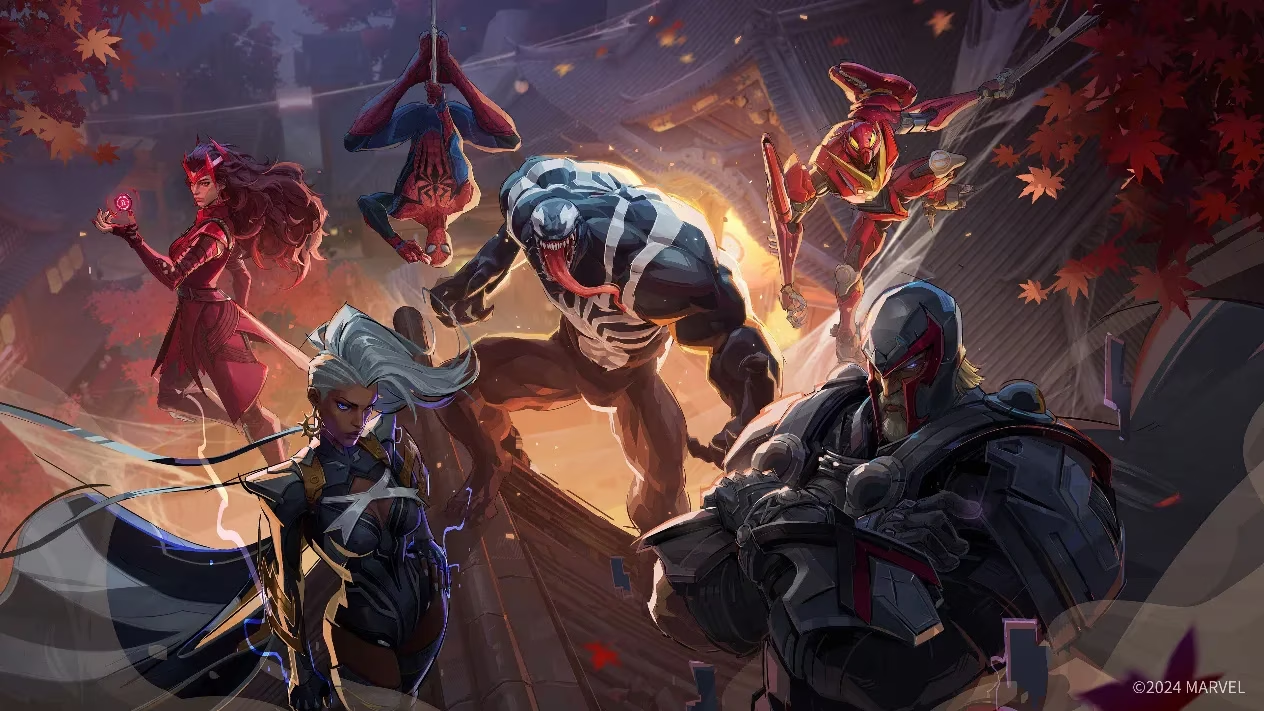
When Marvel Rivals launched back in December 2024, I treated it like a fling—a live-service hero shooter I'd play for a month and ditch. Two years later, I'm still here, grinding seasonal battle passes and losing my mind over how NetEase keeps turning C-list characters into meta-defining monsters. The game has evolved into what Irvine and Seropian probably daydreamed about: a living, breathing multiverse where heroes, villains, and anti-heroes from every corner of Marvel's history collide in glorious 6v6 chaos. Unlike a rigid MGU, Rivals doesn't have to worry about continuity. It just is the crossover event. Every season feels like a new Avengers movie. First, we got the Fantastic Four. Then Ghost Rider rolled in with a hellfire-charged moveset. Just last quarter, Quicksilver zoomed into the roster, and his team-up ability with Scarlet Witch makes me want to weep with nostalgic joy.
The beauty of Rivals as the MGU stand-in is that it's not a static product—it's a platform. The narrative unfolds through comic-book-style cinematics, seasonal story arcs, and map changes that riff on iconic comic events. They even pulled off an "Age of Apocalypse" season that rivaled the actual MCU's Secret Wars hype. All of this without forcing Insomniac to answer for where their Spider-Man was during a Krakoan invasion. The gaming world has shifted so dramatically toward live service that the old multi-title connected universe model feels quaint. Destiny 2, which Seropian's Bungie birthed, paved the way for a decade of evolving storytelling. Fortnite proved that a single game can house Spider-Man, Goku, and a banana within one canon-agnostic battleground. Marvel Rivals just did the same for superheroes, and it works.
So while I pour one out for the ambitious MGU pitch that never was, I'm also kind of grateful it failed. It left room for the wild, unpredictable present: a banger of a live-service game that consumes my evenings, a standalone Blade game from Arkane that I'll play with zero guilt about how it fits into a larger tapestry, and the promise that someday, Insomniac's Logan will bump into their Peter Parker on my terms. Sometimes the best universes are the ones we accidentally stumble into. And if you need me, I'll be in the Rivals queue, praying my team picks a second strategist.
-
The MGU pitch: A 2010s initiative by Alexander Seropian to create an interconnected Marvel gaming universe, revealed by writer Alex Irvine in 2025.
-
Why it failed: No funding, too many licensing partners, and a gaming landscape that wasn't ready for a cross-title continuity burden.
-
The silver lining: We got incredible standalone games and a living crossover in Marvel Rivals, which as of 2026 has become the live-service hub for all our superhero-adjacent mayhem.
And honestly? I wouldn't have it any other way. 😎
As we continue to explore the ever-evolving world of live-service games, it's always a thrill to discover new titles that push the boundaries of storytelling and gameplay. Whether you're a seasoned player or just diving into this genre, staying updated on the latest releases and their prices can enhance your gaming experience. If you're curious about finding the best deals and ensuring you're getting the most out of your gaming budget, you might want to check game prices at DealNest. It's a handy resource for gamers looking to make informed purchasing decisions.
Moreover, as live-service games continue to expand and incorporate more diverse characters and stories, the landscape becomes even more exciting for players. Keeping track of these developments not only enriches your gaming journey but also ensures that you're always in the loop with the latest trends and updates in the gaming universe. So, whether you're strategizing in Marvel Rivals or exploring other dynamic game worlds, make sure to stay informed and enjoy every moment of your gaming adventure.
Leave a Comment