
Marvel Rivals' Player Count Decline in 2026: Natural Cycle or Community Crisis?
Marvel Rivals player count and community drama highlight the hero shooter's evolving challenges, with declining Steam numbers and class conflicts shaping its future.
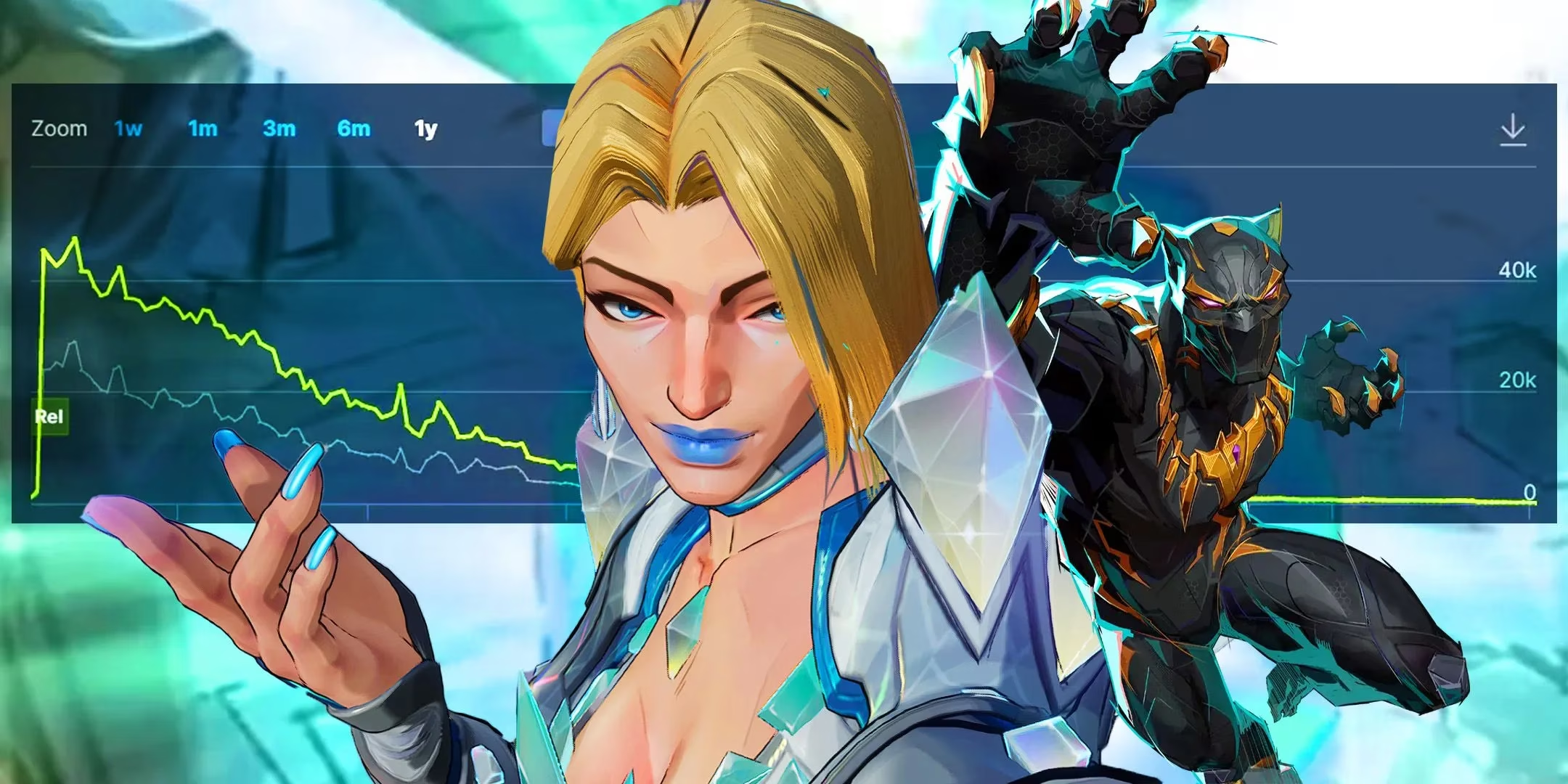
It's mid-2026, and the landscape for Marvel Rivals looks quite different from its explosive debut in late 2024. The hero shooter from NetEase, once hailed as a potential genre titan, has seen its Steam player count settle into a new, lower rhythm. While queues remain quick and new content like skins and characters—including Ultron and others added since launch—continues to flow at a pace that puts some competitors to shame, the game has undeniably stepped down from the staggering heights of over 650,000 concurrent players it enjoyed back in early 2025. The current reality is a 24-hour peak hovering significantly lower, a trend that has become the new normal through Seasons 1, 2, and beyond. But is this simply the expected lifecycle of a live-service game, or are deeper issues within the community accelerating the decline?
The Inevitable Decline vs. An Accelerating Trend
Let's look at the numbers. According to SteamDB data, player counts have followed a predictable seasonal pattern: a significant spike at the launch of a new season, followed by a gradual decline throughout its duration. The mid-season "half-season" updates, interestingly, have done little to reverse this downward trend. The core issue, however, is that each successive seasonal peak has been lower than the last. Season 2's launch, for instance, attracted less than half the peak concurrent players that Season 1 did just a month prior. This isn't just a dip; it's a steeper descent. Games can't retain their launch hype forever—the gaming industry moves too fast. But when a game is still receiving robust support, why are players leaving at an increasing rate? Could the gameplay loop, despite new maps and modes, be growing stale for the broader audience?
A Community Divided: The Strategist vs. Duelist War
Here's where the plot thickens. Many veteran players point to a growing, and often toxic, schism within the Marvel Rivals community as a key driver behind the player drop-off. Since Season 0, there's always been a natural divide between the classes—Vanguards, Duelists, and Strategists—each offering a vastly different playstyle. But by Season 2, this divide erupted into open conflict, notably manifesting in events like the "Strategist Strike." The tension primarily pits Strategists (the support-like heroes) against Duelists (the damage-focused assassins).
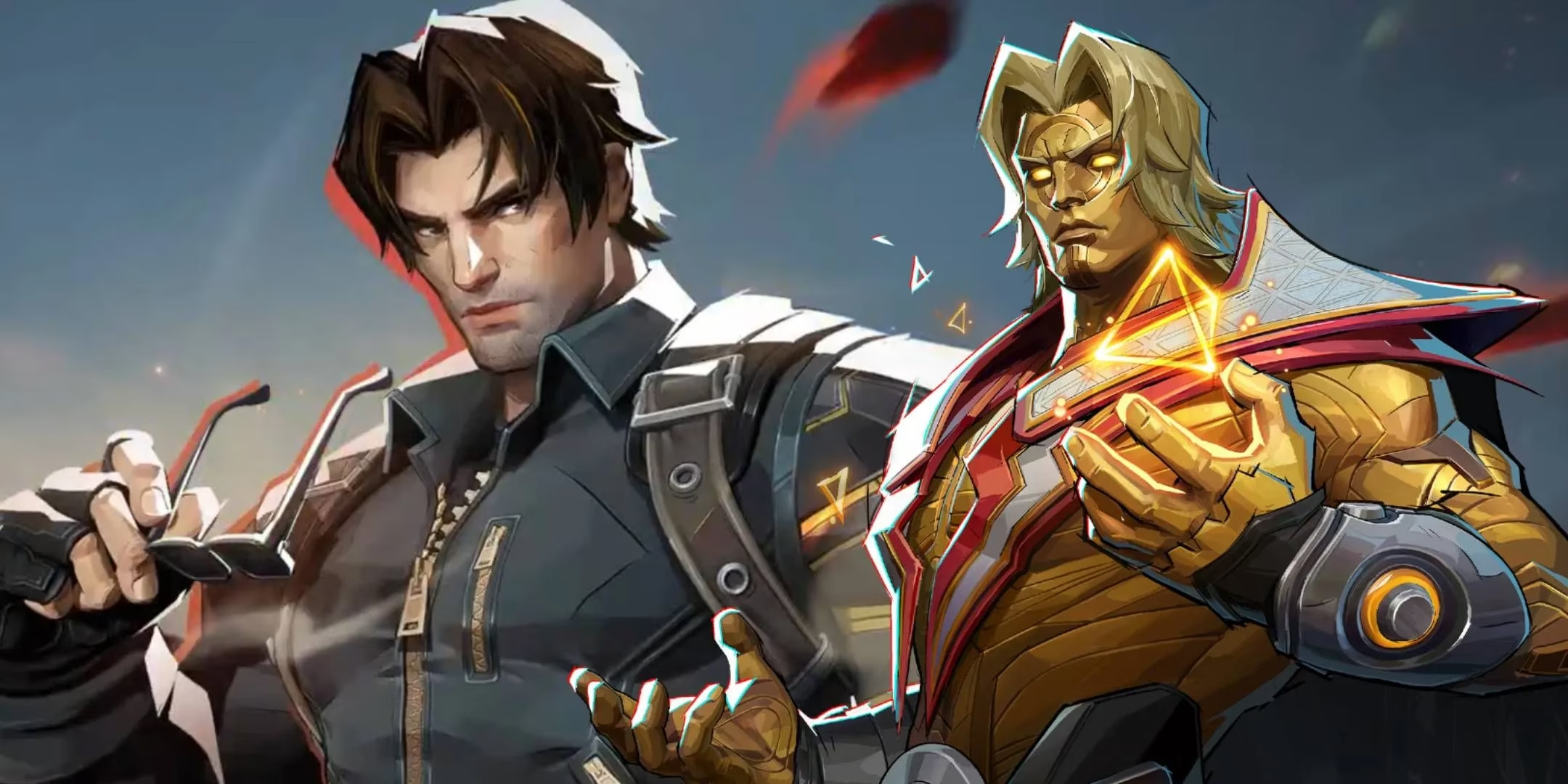
The core of the argument? Each side believes their role is undervalued and more difficult to execute successfully. Duelists demand more protection and healing, while Strategists feel overwhelmed by dive compositions and blame Duelists for over-extending. This conflict has seeped into the competitive ranked mode, the heart of any shooter's core player base. The result is a matchmaking experience often described as exhausting. Players report a cycle that feels like being placed in predetermined "winner's" or "loser's" queues, compounded by teams where text and voice chat are battlegrounds for blame rather than tools for coordination. As one player who reached GM3 put it, the higher they climbed, the more toxic the environment became. This isn't just about balance patches; it's about a community culture that can make playing feel like a chore.
Is NetEase Powerless to Stop the Bleeding?
The developer, NetEase, is far from inactive. They've delivered:
-
New Heroes: Five since launch, with more on the way.
-
Balance Changes: Continuous tweaks to address overpowered compositions (like the dive-heavy meta that made life miserable for Strategists).
-
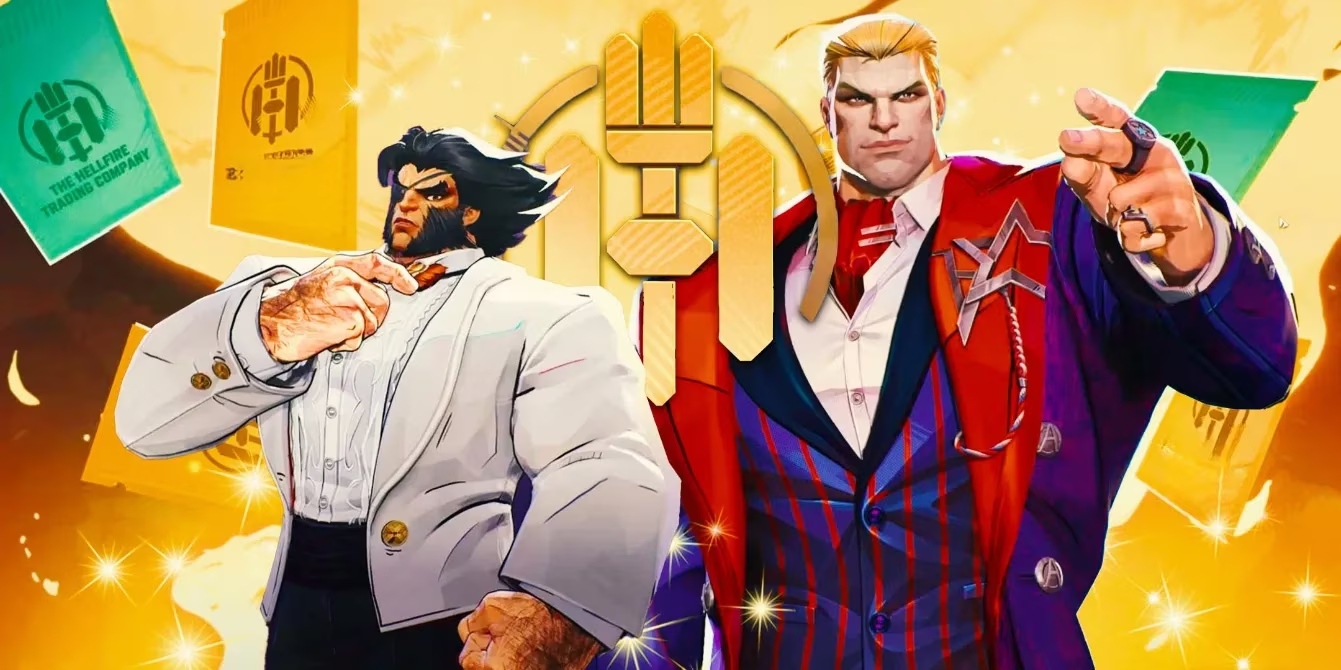
Cosmetic Content: An astounding array of new skins and events, such as the Hellfire Gala.
Yet, there's a growing sense that the most critical problems are beyond simple technical fixes. The community toxicity mirrors issues seen in established titles like Overwatch and League of Legends—games notorious for their challenging social environments. How do you patch player behavior? The performance-based ranking system adjustments didn't fully solve the matchmaking frustrations, and a single toxic player can ruin the experience for nine others.
At its heart, Marvel Rivals was designed to be more inclusive than a traditional shooter. With a diverse roster where precise aim isn't always the most critical skill—positioning, game sense, and ability usage are hugely important—it offered a bridge for players from MOBAs or other genres. But an emerging elitism, particularly around certain roles, threatens that inclusivity. The community needs a fundamental shift in perspective: all roles are vital, and different players excel in different ways. A player with superb game sense can be a phenomenal Vanguard or Strategist even if their flick shots aren't perfect.
Looking Ahead to Season 3 and Beyond
So, where does this leave Marvel Rivals in 2026? A peak of over 150,000 concurrent players on Steam alone is still a healthy figure, and with console players in the mix, the game is far from a ghost town. The content pipeline remains strong. However, the consistent downward trend is a concern that Season 3 will need to address head-on.
The upcoming season must deliver more than just new heroes and maps; it needs to foster a better in-game environment. Could this involve:
-
More robust communication and reporting tools?
-
A revamped matchmaking system that better assesses team synergy?
-
Official channels or in-game systems that promote role appreciation and teamwork?
The natural lifecycle of a game will always see player numbers decline from their peak. But for Marvel Rivals, the accelerated rate suggests that the war between Strategists and Duelists, and the toxic environment it breeds, is actively pushing players away. If NetEase can't find a way to help mend this community rift, the game risks settling into a niche, dedicated but diminished, player base—a far cry from the universe-dominating potential it once seemed to possess. The battle for the future of Marvel Rivals isn't just happening on its virtual maps; it's happening in its voice chats and loading screens.
Leave a Comment