
Marvel Rivals: The Misleading Magic of a Zombie Strange Skin
Marvel Rivals hero shooter controversy erupts as Doctor Strange's zombified skin features vanish in-game, sparking community outrage and trust issues.
I stand amidst the vibrant, chaotic tapestry of Marvel Rivals, a world where heroes and villains clash in a symphony of particle effects and tactical brilliance. The year is 2026, and this game has woven itself into the very fabric of the hero shooter genre, not by stealing a throne, but by crafting its own from the mystic arts of compelling gameplay, harmonious character balance, and a ceaseless tide of fresh, engaging content. Yet, beneath this shimmering surface of excellence, a recent enchantment has gone awry, a spell of commerce that has left a portion of the community feeling disillusioned. The allure of great cosmetics, those visual incantations that personalize our champions, is potent, but when the promised spectacle fades in the crucible of actual play, the magic turns to mist.
The Alluring Illusion of the Sorcerer Supreme
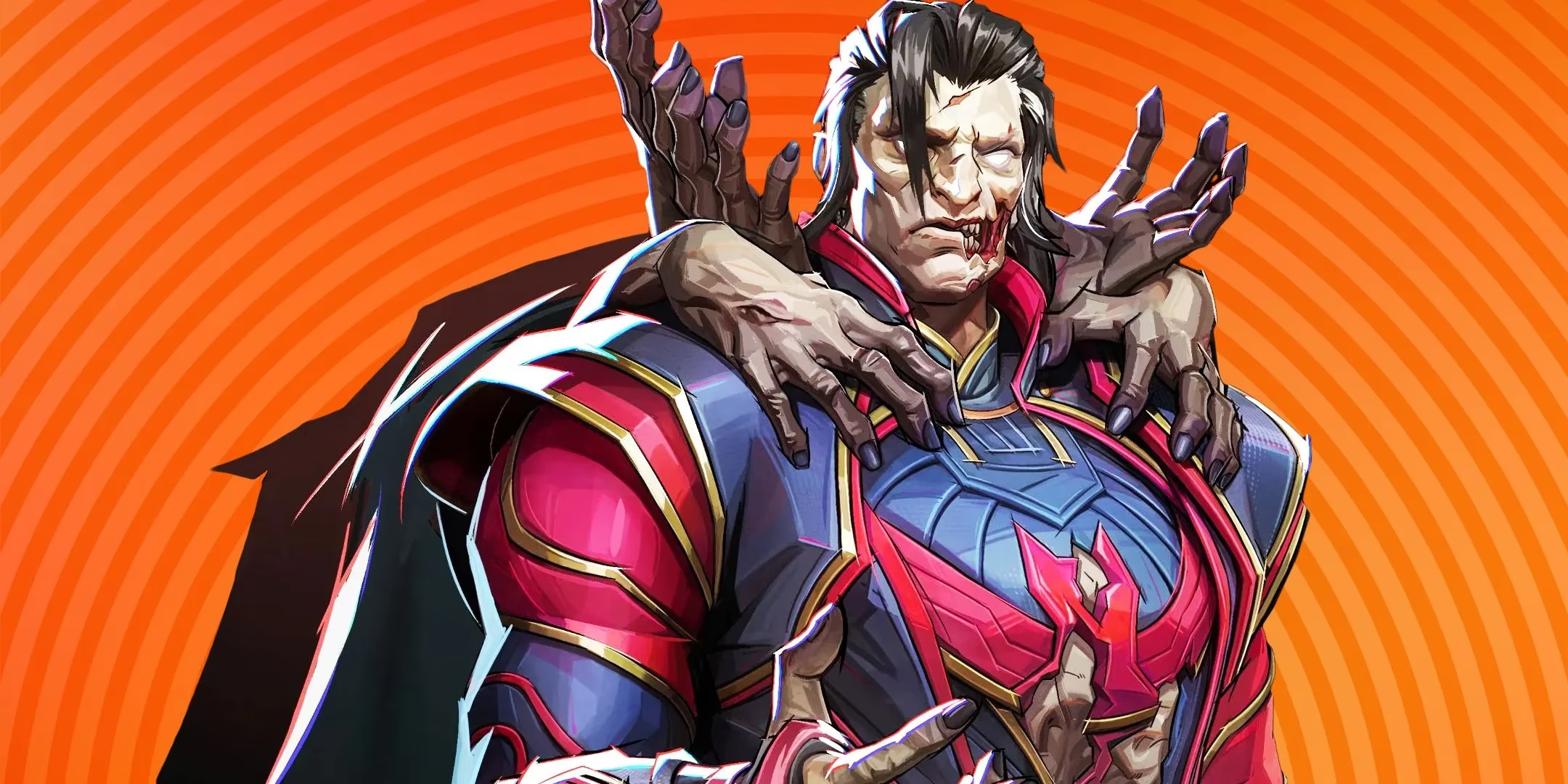
The controversy swirls around a skin of profound thematic resonance: Doctor Strange's Zombified Variant from The Multiverse of Madness. This isn't merely an alternate costume; it's a narrative fragment, a piece of cinematic lore made playable. The promotional visage was captivating—a master of the mystic arts, corrupted and eerie, with multiple decaying, spectral hands emerging menacingly from his collar, a grotesque halo of undeath. This visual signature, these additional appendages, were the cornerstone of the skin's identity, its unique selling proposition in the bustling marketplace of digital vanity. I, like many, saw the advertisements and felt the pull of this macabre masterpiece. The storefront imagery, the dynamic emotes, even the MVP victory screens—all showcased this full, terrifying form. It was a promise etched in light and code.
The Vanishing Act: When Promises Dissipate
However, upon purchasing this $25 transmutation (a not-insignificant sum for a virtual garment), a disheartening revelation occurred. The central, captivating feature—the zombie hands—mysteriously vanished during standard gameplay. The sorcerer was stripped of his most distinctive, advertised attribute. What remained was a still-cool, but fundamentally altered, version of the character. The dissonance between expectation and reality was stark. The community's voice, a chorus across forums and subreddits, rose in unified frustration. One player, Gideon119, articulated the core grievance with precision: "The fact that at every point in the shop they show the hands, EVEN when using different emotes or MVP, but they are not present in game, is truly misleading marketing." Another lamented the pervasive nature of the imagery, noting that even the game's own launch page featured the adorned Strange, making the in-game absence feel like a betrayal, a bait-and-switch of digital assets.
The emotional response wasn't merely about polygons or textures; it was about value perception and trust. Players invest not just currency, but emotional capital into these cosmetics. They are badges of fandom, expressions of identity within the game's universe. When the advertised centerpiece of such an investment is absent, it creates a rift. The table below summarizes the core conflict:
| Promised Feature (Marketing) | Delivered Reality (In-Game) | Community Sentiment |
|---|---|---|
| Multiple zombie hands protruding from collar | Hands absent during standard gameplay | Misled, disappointed, feeling of false advertising |
| Featured in all promotional media: shop, emotes, MVP screens | Only visible in specific, limited contexts (e.g., some menus) | Frustration over inconsistent representation |
| Sold as a premium skin for $25 | Perceived value does not match the price point | Requests for refunds, compensation, or rectification |
A Glimmer of Hope in the Nexus of Realms
Yet, within this turmoil, there exists a filament of hope. NetEase, the architect behind this realm, has a history of listening. The studio has previously demonstrated a capacity to acknowledge community feedback and implement changes. This precedent fuels a cautious optimism among the player base. While retroactively adding complex, persistent hand effects to the skin in all gameplay scenarios may be a technical or design challenge too great at this juncture, the community speculates on other forms of redress. Perhaps a gesture of goodwill is on the horizon:
-
Compensatory Currency: Providing some amount of premium currency to those who purchased the skin.
-
Price Adjustment: Permanently reducing the skin's cost and offering a partial refund to early adopters.
-
Enhanced Clarity: Implementing clearer labeling on future skins regarding which features are gameplay-persistent versus menu-only.
This incident serves as a poignant lesson in the alchemy of player expectation. In a live-service game thriving in 2026, transparency is as crucial as any balance patch. The visual splendor, the "beefy backsides and great cosmetics" that contribute to the game's charm, must be delivered as advertised. The magic of Marvel Rivals lies in its ability to make us feel like powerful heroes; part of that fantasy is looking the part, utterly and completely. When a spell of commerce obscures the truth, even momentarily, it breaks the immersion we all cherish.
I watch the ongoing discourse, a silent observer in the Sanctum Sanctorum of this digital universe. The resolution to this mystic mishap remains unwritten. Will NetEase weave a corrective incantation, mending the rift with its devoted players? Or will this skin remain a curious relic, a reminder that even in a multiverse of miracles, the details matter? Only time, and the developers' next move, will tell. The game's foundation is strong, its future bright, but this episode underscores that maintaining trust is the most powerful superpower of all. 🧙♂️✨
Leave a Comment