
Marvel Rivals Vanguards: Why Tanks Playing Scared Sparks Debate in 2026
Marvel Rivals Vanguards who play scared give up space, expose Strategists, and lose fights. Learn why timid tanks break team pushes.
In the fast-moving hero shooter Marvel Rivals, few arguments cut deeper than the one about Vanguards who refuse to push. A Reddit thread from user SquiblyMcDuck lit the fuse, complaining that there is 'literally nothing worse than vanguard players who have 2-3 heals supporting them directly, AND THEY PLAY SCARED.' The post struck a nerve because it names a frustration many players feel: a tank who steps up, takes a few hits, then folds like a cheap suit, leaving the rest of the team exposed. In 2026, with the game's meta continuing to shift through seasonal updates and balance patches, that debate has not gone away. If anything, it has become a litmus test for understanding how team-based hero shooters actually work.
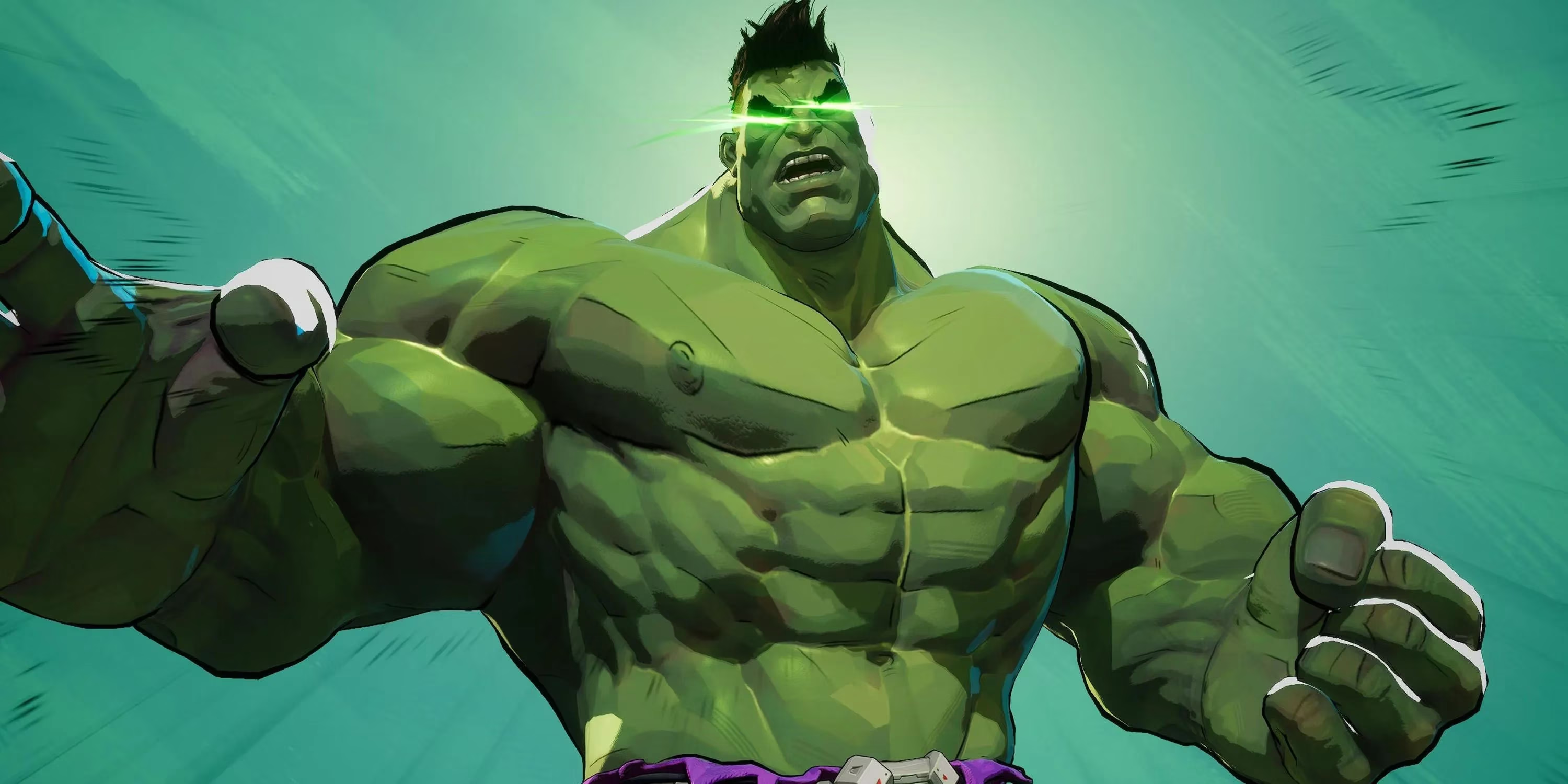
The Core Disagreement: Push or Hold?
Vanguards in Marvel Rivals are designed to create space, absorb enemy cooldowns, and anchor a fight. They push the enemy team back so Duelists and Strategists can hold a point or move a payload forward. The hard part is not knowing that a tank should push; it is knowing when to push, when to stand firm, and when to fall back because heals are running dry or the enemy is pouring on damage.
SquiblyMcDuck's complaint is not that tanks should charge in like Leeroy Jenkins every time. It is that too many Vanguards play as if their health bar is made of wet paper. They take a few hits, panic, and back up. That retreat often leaves their own team open. Worse, it lets the enemy tank lead the opposition straight into the backline, where Strategists and Duelists are easy pickings.
The original poster later responded to comments claiming that pushing was simply not an option. Their answer was blunt: the way these Overwatch-type games work is that two teams clash in a head-on struggle. It is a test of which team can outlast the other. Tanks are the pillars that hold the team together, while supports and DPS reinforce those pillars. That is true. The game is not about mindlessly pressing W, but it is also not about giving up ground for free.
Why Timid Tanks Break a Team
When a Vanguard plays scared, the whole team feels it. Here are the most common ways that fear turns into a loss:
-
🛡️ Free space for the enemy. A tank who backs up without pressure hands over chokes, high ground, and health packs.
-
💀 Backline dives. If the Vanguard retreats, Psylocke, Black Panther, and other dive heroes can feast on unprotected Strategists.
-
🧨 Wasted ultimates. A tank who never commits often holds their ultimate until the fight is already lost.
-
🐢 Staggered spawns. Timid tanks may survive, but their team dies, and the next fight starts with a numbers disadvantage.
-
😤 Tank diff accusations. Teammates start typing 'tank diff' in chat, and morale goes down the drain.
Commenter ZoninoDaRat added another valid point: 'We move up as a team, I push forward to create space and then I look back and I'm the only one who has done so.' That is the nightmare scenario for any Vanguard. If Strategists do not push up with their tank, the tank is going to be burned down in a matter of seconds. Once the pillar falls, the rest of the team is open to being burned down as well.
The Other Side of the Coin: Tanking Is Hard
It is easy to shout 'just push' from the backline, but tanking is not as simple as it looks. A Vanguard is deeply reliant on the rest of the team, especially Strategists. If one Strategist is not putting out enough heals, the tank goes down quickly. If a Duelist is not putting out enough damage, the backline gets dived and everyone ends up back in spawn.
That does not excuse every timid play, but it explains why some tank players are gun-shy. They have been burned before. They have pushed with two healers allegedly watching them, only to melt because those healers were distracted, out of position, or saving their ultimate for a rainy day. Tank players deserve more applause and recognition than they get. When a Vanguard holds the line, eats a dozen cooldowns, and creates the opening for a team wipe, the Duelist often gets the highlight. The tank gets a 'good job' if they are lucky.
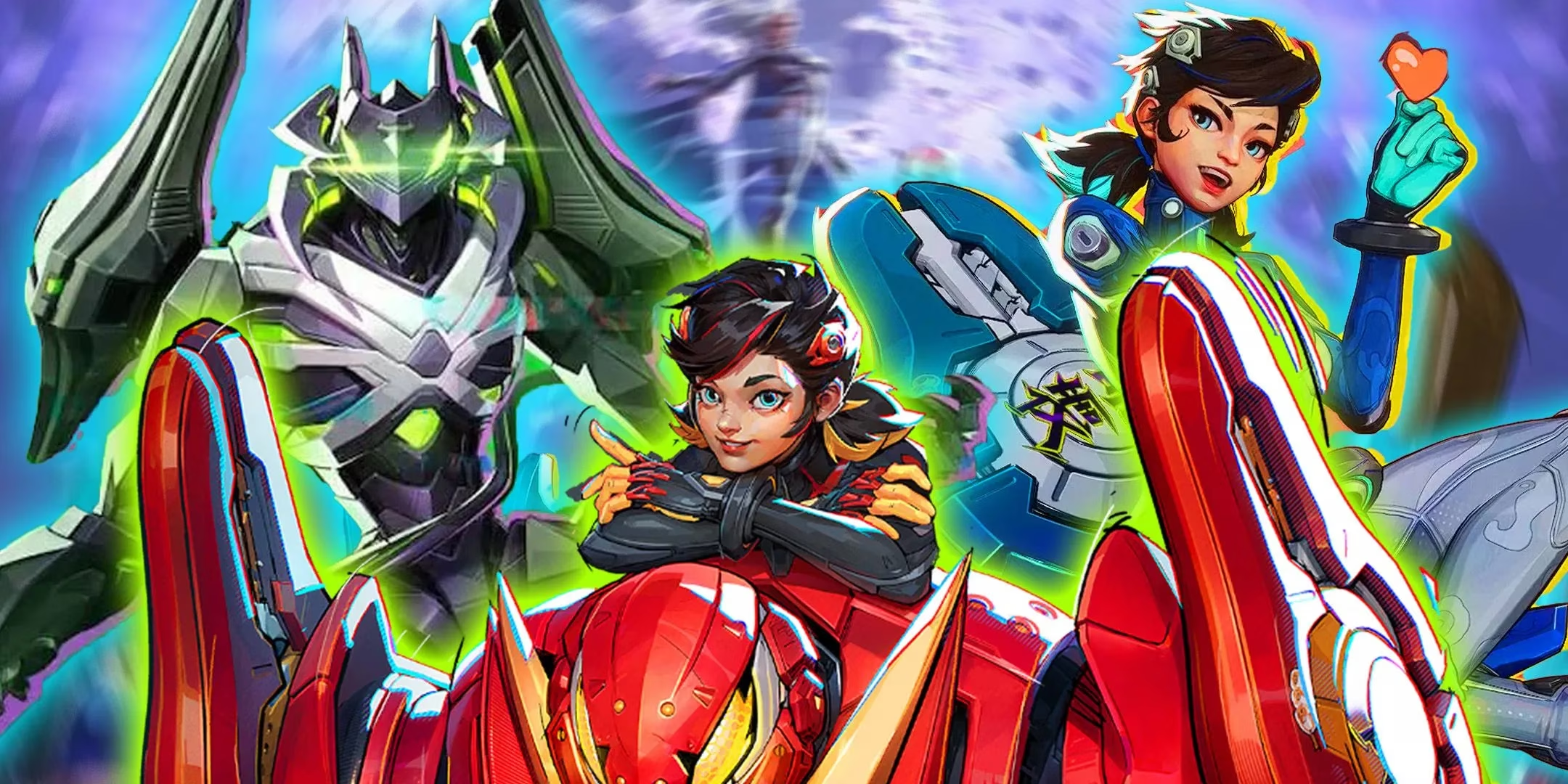
How to Tell If Your Vanguard Is Playing Too Scared
| Behavior | What It Signals | Better Play |
|---|---|---|
| Backs up after first contact | Fear of commitment | Use cover, trust healers, and contest the choke |
| Waits for full health before re-engaging | Passive mindset | Cycle cooldowns and use health packs to stay active |
| Never uses ultimate to start a fight | Lost tempo | Coordinate with a support ultimate and initiate |
| Runs to spawn after one death | Staggering the team | Regroup at the next choke and wait for allies |
| Blames healers for every death | Poor positioning | Check line of sight and track enemy cooldowns |
What Good Vanguard Play Looks Like in 2026
By 2026, Marvel Rivals has been through multiple seasons, balance changes, and roster additions. The fundamentals have not changed. A good Vanguard does not push constantly, and a good Vanguard does not hide. They read the fight. They move up when their Strategists have line of sight, when their Duelists are ready to follow, and when the enemy has burned key cooldowns. They fall back when they are low, when their supports are dead, or when the enemy has a clear ultimate advantage.
The best tanks are not reckless. They are confident. They know that their job is not to die for the team, but to make space so the team can win the fight. They also know that a tank who never tests the enemy is just a punching bag with a health bar. As the old saying goes, you cannot win a gunfight by hiding in the shed.
Final Thoughts: Respect the Pillars
Every role in Marvel Rivals matters. Vanguards are the backbone, but they are not solo carries. They need Strategists to keep them upright and Duelists to punish the enemy when space is created. Likewise, Strategists and Duelists need Vanguards to stand their ground and not fold like a cheap suit the moment a bullet grazes their armor.
The debate over timid tanks is really a debate about trust. Tanks must trust their supports. Supports must trust their tanks. Duelists must trust that the space is real. When that trust works, Marvel Rivals feels like a beautiful, chaotic ballet. When it breaks, everyone starts pointing fingers. In 2026, the lesson remains the same: know when to hold and when to fold. But if you are a Vanguard with two healers behind you, for crying out loud, do not play scared. Push up, make space, and let the enemy feel the weight of the pillar.
Leave a Comment