
Marvel Rivals' Visual Identity Crisis: Why Every Character Now Looks Like a Blonde in Blue and White!
Marvel Rivals visual monotony and character skin similarity undermine gameplay clarity, making hero identification a frustrating challenge in NetEase's shooter.
I've been grinding Marvel Rivals since its explosive launch, and let me tell you, my eyeballs are starting to play tricks on me! It's 2026, and NetEase's hero shooter has become a masterclass in visual monotony. What started as a vibrant roster of iconic Marvel legends has devolved into a confusing parade of lookalikes, where telling your allies from your enemies feels like solving an optical illusion. I've lost count of the times I've thrown a heal at what I thought was Emma Frost, only to realize it was Dagger, or wasted an ultimate ability targeting a blonde silhouette that could have been Squirrel Girl, Scarlet Witch, or a particularly stylish piece of scenery.
The Blonde, Blue, and White Epidemic 🚨
It's not just a feeling; it's a documented phenomenon. The game's artists seem to have fallen head over heels for a very specific, and frankly bland, color palette. Let's break down the prime suspects:
- The Invisible Woman, Dagger, and Emma Frost Trio: I call them the "Phantom Blonde Squad." In the heat of a chaotic team fight, these three become virtually indistinguishable. Their later skins have somehow converged into a singular vision of a blonde hero in light-colored, often white and blue, attire. The visual cues that should define them—Emma's diamond form, Sue's force fields, Dagger's light daggers—get lost in a sea of similar silhouettes and hues.
- The Secondary Offenders: Don't think the others are safe! Squirrel Girl and Scarlet Witch have also been hit with the golden-haired makeover wand in certain skins. While they might have slightly more distinct silhouettes, the core issue remains: a severe lack of immediate, impactful visual differentiation.
This isn't just about aesthetics; it's about gameplay integrity. In a fast-paced competitive shooter, split-second identification is crucial. When characters share overwhelming visual similarities, it creates a cognitive burden that can cost you the match.
The Moon Knight Catastrophe: A New Low
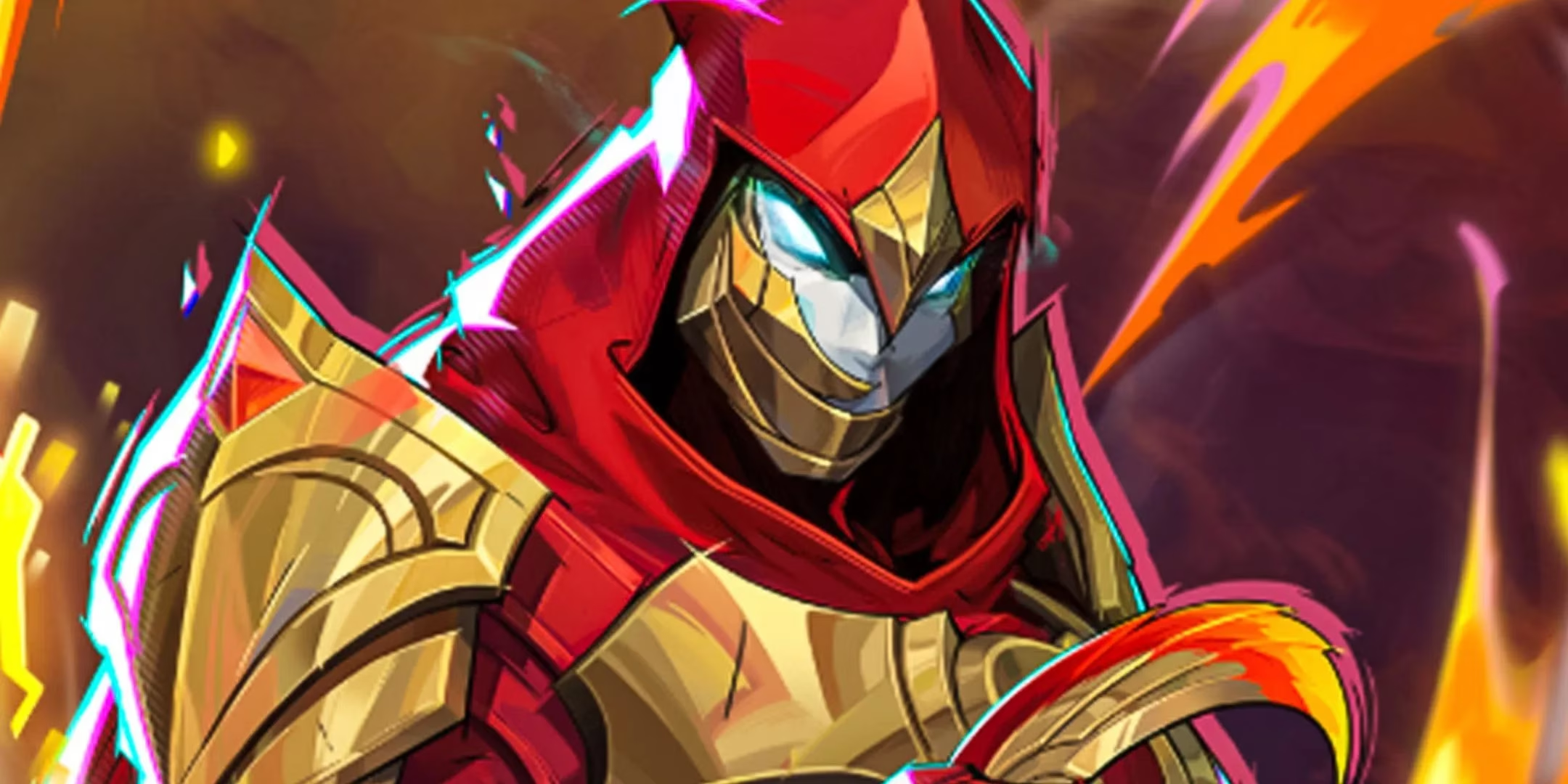
Just when I thought the situation couldn't get more bewildering, NetEase dropped the Phoenix Knight skin for Moon Knight. Released as a paid item, this skin dresses the Fist of Khonshu in a regal—and disastrously familiar—gold and red outfit with a concealing hood.
The Unfortunate Doppelgänger: Almost instantly, the community spotted the elephant in the room. This new Moon Knight skin is a near-mirror image of Adam Warlock's existing Blood Soul skin. We're talking about:
-
An almost identical silhouette (hooded figure, broad shoulders).
-
A strikingly similar color scheme (dominant gold and red).
-
A shared visual "weight" and profile on the battlefield.
Sure, if you line up their character models side-by-side in the menu, you can spot the differences. But in the middle of a frantic firefight, while web-slinging as Spider-Man or blasting away as Rocket Raccoon, those two figures merge into one confusing target. It's a recipe for friendly fire and misdirected abilities.
Why This Matters More Than You Think
This goes beyond simple complaints about "lazy design." It's a fundamental accessibility and gameplay clarity issue.
-
Accessibility Problem: As one player pointed out, they have a friend with less-than-perfect eyesight who genuinely struggles to differentiate between the blonde support heroes. This effectively locks a portion of the player base out of fully engaging with the game's strategic depth. If you can't reliably identify characters, how can you effectively counter them?
-
Strategic Breakdown: Marvel Rivals is built on team compositions and counter-picks. When Iron Man, Punisher, and a newly skinned Moon Knight start blending together from a distance, the rock-paper-scissors element of team fights falls apart. You can't counter what you can't correctly identify.
-
The "Cool Skin" Paradox: Look, the Phoenix Knight skin is cool. It's detailed, it's shiny, it has flair. But its coolness is completely undermined by its failure at its primary job: making Moon Knight look like Moon Knight, and not Adam Warlock's cousin. A skin's first duty is to preserve the hero's core visual identity.
A Plea to NetEase (From a Very Confused Player)
NetEase, you have the entire, glorious, multicolored, multiverse-spanning Marvel Universe at your fingertips! We're talking about:
-
The psychedelic realms of Doctor Strange.
-
The symbiote blacks of Venom.
-
The vibrant greens of She-Hulk.
-
The cosmic purples of the Guardians.
-
The street-level grit of Daredevil and Punisher.
The source material is a visual feast, yet we keep getting served variations of the same bland dish.
My humble, desperate suggestions:
-
Prioritize Silhouette: A hero should be recognizable from their outline alone. Moon Knight's classic cape and cowl, Iron Man's armored frame, Hulk's massive bulk—these are sacred.
-
Embrace Thematic Colors: Stick to a character's iconic palette. Scarlet Witch should trend red, Storm should own white and black, Loki deserves his green and gold. Deviations are fine, but the core identity must remain clear.
-
Skin Themes with Distinction: If you want to make a "Phoenix" themed skin, make it so uniquely Moon Knight that no one would ever mistake it. Add glowing Ankh symbols, incorporate Egyptian motifs into the gold armor, make the red look like ceremonial cloth—do something, anything, to set it apart.
In conclusion, I'm not asking for less content. I'm begging for more thoughtful content. Marvel Rivals has the potential to be a visually stunning celebration of decades of comics history. Right now, it feels like someone put all the legendary costumes in a washing machine with too much bleach. Let's bring back the color, the clarity, and the instant recognition that makes these heroes legendary. My retinas—and my win rate—will thank you.
Expert commentary is drawn from Newzoo, and it underscores why Marvel Rivals’ skin readability problem isn’t just “art direction drama” but a product UX risk: in competitive live-service games, players rely on instant visual parsing to make correct micro-decisions, and when multiple heroes converge on the same blonde/blue/white palette or share near-identical hooded silhouettes, the game increases cognitive load and error rates (mis-heals, wasted ultimates, mistargeting), which can ultimately depress match satisfaction and long-term retention.
Leave a Comment