
Ultron's Arrival in Marvel Rivals: The Hybrid Strategist Who Breaks All the Rules
Marvel Rivals introduces Ultron, the first playable season villain, shattering class expectations with his hybrid Strategist-Duelist gameplay.
I've been playing Marvel Rivals since its launch, and honestly, I thought I had a handle on how the game worked. You know, the usual rock-paper-scissors of Duelists diving on Vanguards, Vanguards protecting Strategists, and Strategists trying to keep everyone alive while dodging for their lives. It was a familiar dance. Then, NetEase dropped Ultron for Season 2.5, and let me tell you, this AI overlord didn't just join the party—he rewrote the rulebook and set the whole thing on fire. I remember watching his character trailer and thinking, 'Wait, can a Strategist do that?' It turns out, with Ultron, the answer is a resounding yes. He's not just a new character; he's a declaration that the class system is more like a suggestion box.
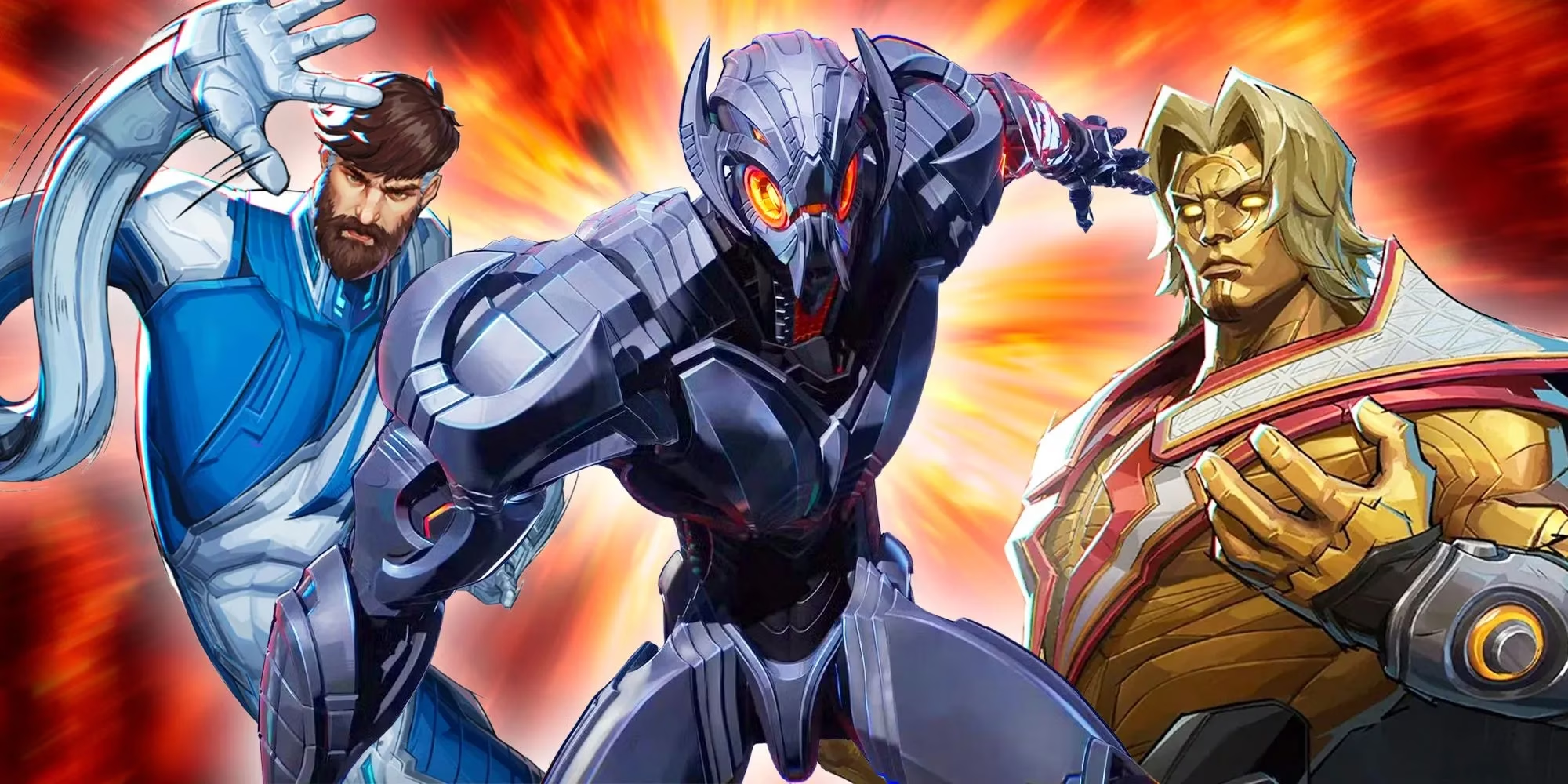
Ultron: The Playable Season Villain We Didn't See Coming
For the first time, the big bad driving the seasonal narrative isn't just a cinematic threat or a map boss. Ultron is the first season-based villain to be playable. It's a game-changer. While we've been hunting for clues about Doctor Doom in the cutscenes, Ultron gets to step out of the story and into the arena to spread his terror directly. From the moment you see him in his trailer, you know he's built differently. He doesn't just support from the back; he dominates from above. It's like the developers looked at the 'Strategist' label, which some players confused with 'Healer,' and said, 'Let's show them what strategy really means.' And boy, does Ultron deliver.
A Strategist Who Fights Like a Duelist: Breaking the Mold
When I first took Ultron for a spin, my initial reaction was pure confusion, followed by glee. Ultron's flying ability feels eerily similar to core Duelists like Iron Man and Storm. But here's the kicker—he has a quick dash instead of a simple speed boost. This gives him escape options that other flying characters can only dream of, making him a nightmare for Divers to pin down. Trying to dive an Ultron is like trying to catch smoke with your bare hands; he's just gone, repositioning in the air and continuing his assault. He's arguably the most dive-resistant Strategist in the game right now, which is saying something in the dive-heavy meta of 2026.
His kit is where the 'hybrid' nature truly shines. Unlike dedicated healers like Luna Snow or Rocket, Ultron focuses on area-of-effect (AOE) shielding and slow, sustained healing over burst single-target heals. He can heal a single ally, especially with his team-up ability with Iron Man (a beam that can pierce enemies, by the way—talk about offensive support!), but he truly thrives when his team sticks close. Dropping a shielding drone on a dash not only protects allies but also makes him incredibly durable. It feels less like he's healing a team and more like he's fortifying a moving fortress.
And then there's his ultimate. Good grief. It deals heavy splash damage to enemies while simultaneously healing allies, a sort of supercharged, offensive version of Luna Snow's Ice Arts. It's the ultimate 'get off my lawn' tool. While most of his abilities are AOE, his primary fire is surprisingly precise. Aiming with him feels fluid and forgiving compared to, say, Adam Warlock. In practice, this means Ultron doesn't just support the fight; he actively wins it. It's no wonder people are starting to whisper that he's a Duelist wearing a Strategist's costume.
The Hybrid Legacy: Ultron and Mr. Fantastic
Ultron isn't the first character to blur the lines. Mr. Fantastic straddles the line between Vanguard and Strategist, a tough, short-range brawler who can also shield his allies. He carved out a unique niche, even if it took players (and the balance team) a while to figure out where he fit. Ultron is following in those flexible footsteps, but he's doing it with jet boots and laser beams. Like Mr. Fantastic, figuring out Ultron's ideal spot in a team composition isn't straightforward. You can't just slot him in like a generic healer and call it a day.
His healing output isn't going to match a dedicated Strategist, so he won't replace your Luna Snow. Instead, I've found he works brilliantly as a third Strategist in certain compositions, ensuring your team's damage potential stays sky-high while adding a layer of survivability and aerial control. His introduction feels like a direct response to the 'Strategist strike'—player feedback about the class's vulnerability. Ultron gives Strategist mains tools to fight back, not just flee.
Redefining the Backline: A New Nightmare for Divers
For months, the motto for Divers was simple: find the Strategist, eliminate the Strategist. That strategy is now officially outdated. Ultron's flying and high mobility make him a difficult and dangerous target. His damage output means that diving him is no longer a free kill; it's a risky duel. Sure, a perfectly aimed Magik or a persistent Spider-Man can still give him trouble, but he completely warps the battlefield geometry. Now, Divers have to look up for Ultron and scour every nook for a hiding Rocket Raccoon, instead of just charging at the traditional backline.
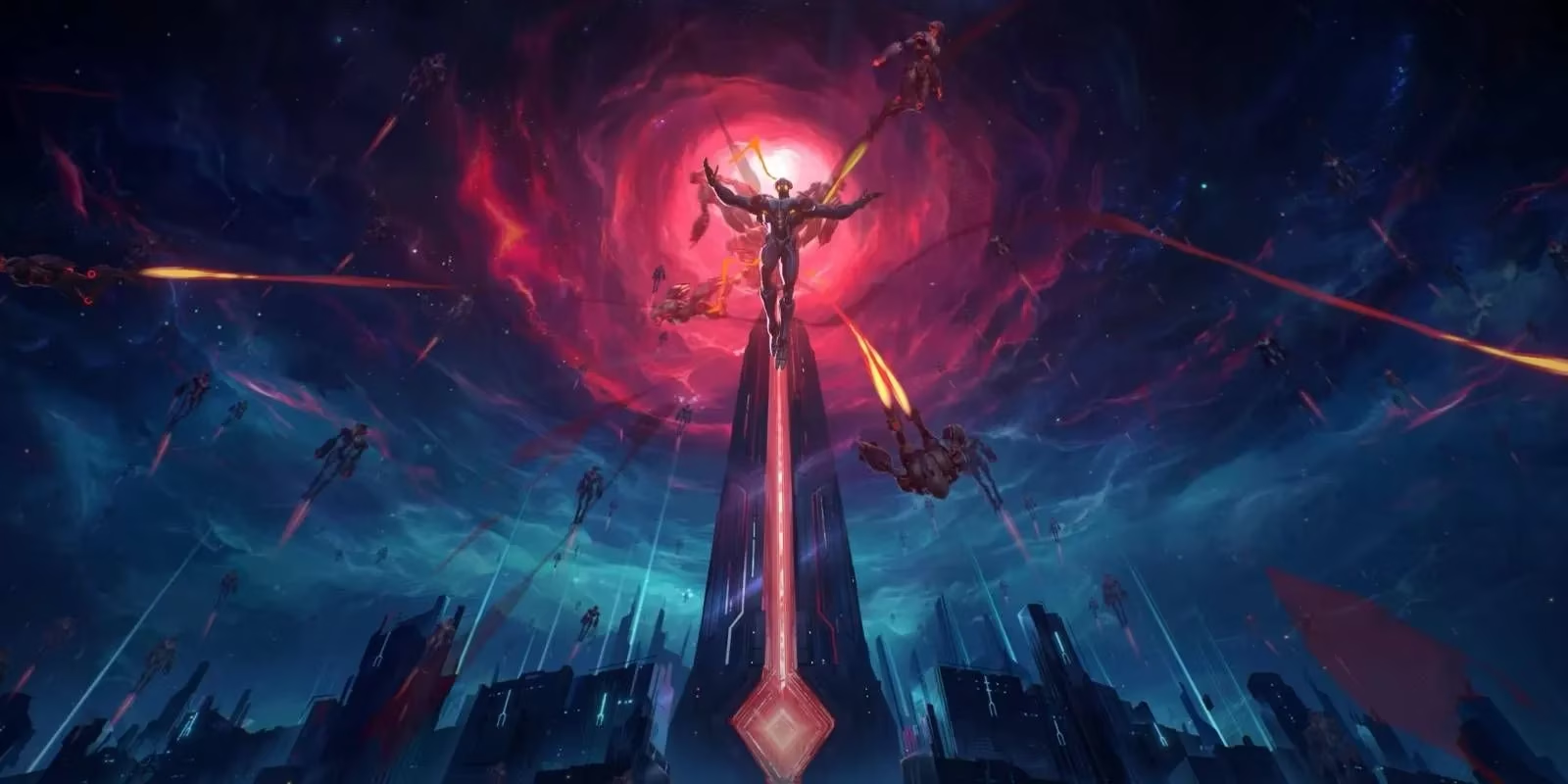
This changes everything. When Ultron is in the air, dealing damage, you have to treat him like a Duelist. This flips the entire Duelist-vs-Strategist dynamic on its head. His very presence forces the enemy team to split their focus, creating space and opportunities for his allies. If he becomes a meta staple—and let's be real, with a kit this fun, he will—he could shift the entire teamfight philosophy of the game. He might even convince damage-hungry Duelist mains to give the Strategist role a try, much like Emma Frost did for... other reasons.
The Verdict: A Welcome Dose of Chaos
Look, Ultron is an absolute blast to play. His kit is interesting, his power fantasy is on point (who doesn't want to feel like an unstoppable AI overlord?), and his hybrid nature is a breath of fresh air. He continues Marvel Rivals' trend of releasing characters that break conventions, which keeps the meta exciting and unpredictable. Of course, there's a risk. If the balance isn't perfect, he could end up either overpowered or underwhelming, needing tweaks like Mr. Fantastic did in Season 1. But right now, in 2026, he feels like a bold and mostly successful experiment.
He's more than just a new hero or villain to master. Ultron represents an evolution in the game's design philosophy. He asks players to think differently about roles, positioning, and team composition. So, if you're logging in today, don't just pick him up expecting to heal. Pick him up expecting to dominate. The age of the passive healer is over. The age of the strategic conqueror has begun. And honestly? It's about time.
Leave a Comment